


Qi (氣 / 气, or Chi) once felt entirely foreign to me. I associated it vaguely with martial arts or faraway cultures I didn’t know much about. That changed when I began acupuncture to treat my trigeminal nerve pain, migraines, and hormonal imbalances. My acupuncturist helped me realize that Qi and I had a much closer relationship than I thought.
Long before wellness became a commercialized industry, ancient Chinese philosophers described the universe as a dynamic field of energy with a force that makes things feel alive. They called that force Qi, which directly translates to “air” or “breath”. It flows through our bodies and our environments.
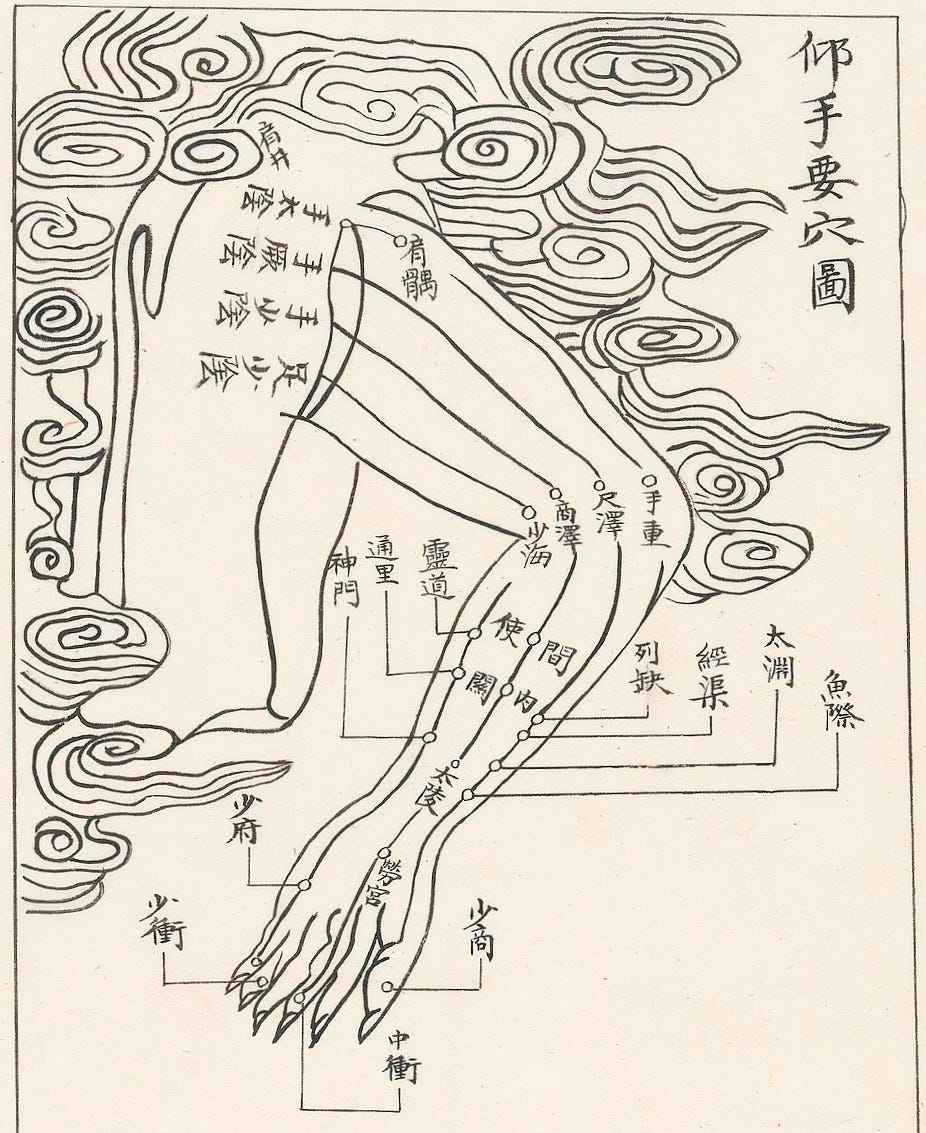
According to Traditional Chinese Medicine (TCM), we all have Qi. TCM believes that Qi flows through specific channels, or meridians. If Qi is balanced, the person is physically, spiritually, and emotionally healthy. But Qi can get blocked, causing imbalances between yin and yang, two opposite but connected principles in Chinese philosophy. And blocked Qi is noticable when we start to feel sick, depressed, or stagnant. Acupuncture is one of many ways that TCM treats blocked Qi.
Understanding Qi offers insight not only into ancient belief systems, but into how people continue to find harmony and balance today.
Origins of Qi
The concept of Qi appears in early Chinese texts dating back over two millennia. It is central to classical Daoist and Confucian philosophy, particularly in texts such as the Dao De Jing attributed to Laozi and the Zhuangzi attributed to Zhuangzi.
In early Chinese cosmology, Qi was understood as the fundamental substance or force that constitutes and animates the universe. Rather than separating matter and energy, classical Chinese thought viewed reality as configurations of Qi in different densities and movements.
Qi theory later integrated with the concept of Qi Gong, a meditative movement meant to guide Qi. Yin and yang cyclically adjust to and transform into one another through predictable stages. These Five Phases (wood, fire, earth, metal, and water — each nourishing the next) form a framework used in philosophy, governance, medicine, and architecture.
Qi in Traditional Chinese Medicine and Martial Arts
Qi is a foundation of TCM. Classical medical texts such as the Huangdi Neijing (Yellow Emperor’s Inner Canon, compiled around the 2nd century BCE) describe health as the balanced and unobstructed flow of Qi through pathways known as meridians.
Practices such as acupuncture, herbal medicine, and Qi Gong aim to regulate and harmonize Qi within the body.
In martial arts, especially Tai Chi, practitioners cultivate internal energy through slow, intentional movement and breath control. Modern research shows Tai Chi improves balance, flexibility, and stress regulation, though the measurable concept of “Qi” itself remains philosophically defined rather than empirically quantified.
Note: while Qi is central in traditional frameworks, modern biomedical science does not recognize Qi as a measurable physical substance. Its function in contemporary medicine is interpreted symbolically or holistically rather than as a scientifically verified health metric.
Qi in Modern Chinese Society
Qi remains culturally significant in China today, particularly through:
Traditional medicine clinics
Public parks filled with morning qigong practice
Martial arts schools
Architectural design rooted in Feng shui principles
Feng shui, which translates roughly to “wind-water,” developed as a system for orienting buildings and landscapes to harmonize human life with environmental Qi. Though sometimes commercialized internationally, it remains a respected traditional practice in parts of East Asia.
Qi is also embedded linguistically. Expressions like “sheng qi” (“to become angry” in Mandarin) or “you qi zhi” (having vitality, charm, or good aura in Chinese Pinyin) reflect how deeply the concept is woven into everyday language.
Qi Around the World
In the 20th and 21st centuries, Qi entered global wellness culture through:
Acupuncture clinics in Europe and North America
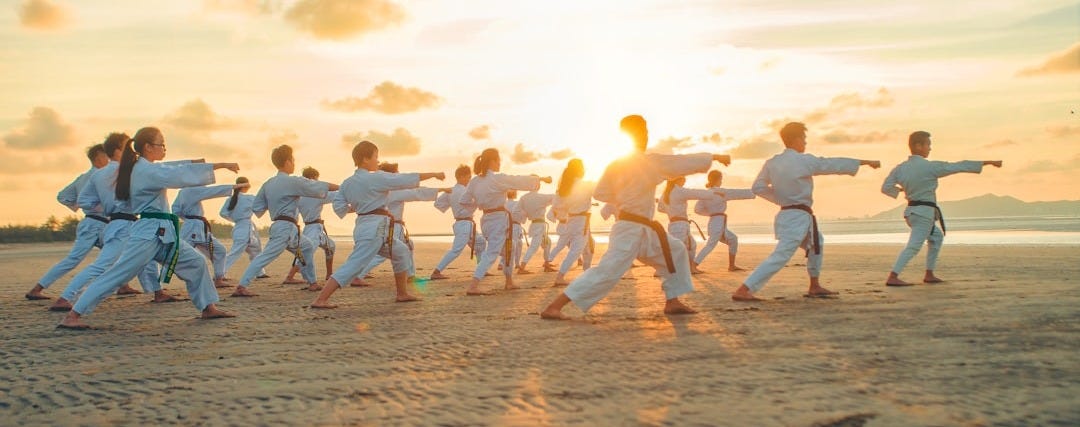
Tai Chi and qigong classes
Holistic health movements
Integrative medicine programs
The World Health Organization recognizes Traditional Chinese Medicine as part of global complementary health systems, though it distinguishes between traditional practice and evidence-based medicine.
Outside China, Qi is often reframed in terms of “energy flow,” “life force,” or “mind-body integration.” While interpretations vary, its core emphasis on balance, breath, and intentional living resonates across cultures.
Positive Qi in the Home
Drawing from classical feng shui principles and contemporary design psychology:
1. Begin at the Entry
In feng shui theory, the entryway is where Qi enters the home. Clear pathways, good lighting, and intentional organization allow energy to circulate freely. In my recent interview with Tram Anh Tran, she agrees that an organized and inviting entryway is essential to a home that promotes wellness.
In modern design psychology, this brings to mind first impressions. The lobby of a building or the foyer of a home give the occupant an idea of what to expect from a space. Is it pleasant? Is it welcoming? Does it look clean and safe? Can someone find their way to what they need? I spend a lot of time tailoring that first encounter to my clients’ identities and core values.
2. Remove Stagnation
Clutter is considered a blocker of Qi. Modern environmental psychology supports this: visual clutter is associated with increased stress and cognitive overload, especially for women.
For me, clutter is the number one thing I notice in a space. It makes it hard for me to not only focus, but function at all. Clutter disrupts a room’s intention. I love functional storage solutions and getting rid of things I no longer need nor want. Equally as important is not buying impulsively to begin with.
3. Balance Elements
In traditional Five Phase theory, balance is achieved through proportional representation of natural materials — wood, metal, earth tones, water features, and light. You do not need symbolic objects; texture and material variety can serve a similar function.
Many cultures prioritize natural materials in architecture. Biophilia and connection to nature are proven to reduce stress and increase happiness and healing.
4. Prioritize Air and Light
Qi is closely associated with breath. Ventilation and natural light improve both physical well-being and perceived vitality of a space.
Also, since starting physical therapy in conjunction with acupuncture, I cannot emphasize enough how much proper, deep breathing can help with holistic wellness. Despite something we’ve all been doing since birth, it’s surprisingly easy to do incorrectly. I’ll cover the specific benefits that improved breathing has had on my health in a future post.
5. Mindful Placement
Furniture arranged to promote ease of movement supports a feeling of flow. Sharp angles directed at seating areas are traditionally discouraged in feng shui, as they are believed to create disruptive Qi.
Even for those who do not adopt Qi as a literal force, these principles align with well-documented design fundamentals: circulation, light, proportion, and order. I plan to dive deeper into feng shui concepts in later posts.
From ancient Daoist texts to morning Tai Chi in public parks, from acupuncture clinics to modern interiors, Qi remains. Its endurance suggests that across centuries and continents, people remain drawn to the idea that balance can be nurtured and cultivated through intention.
Be well - Emily

